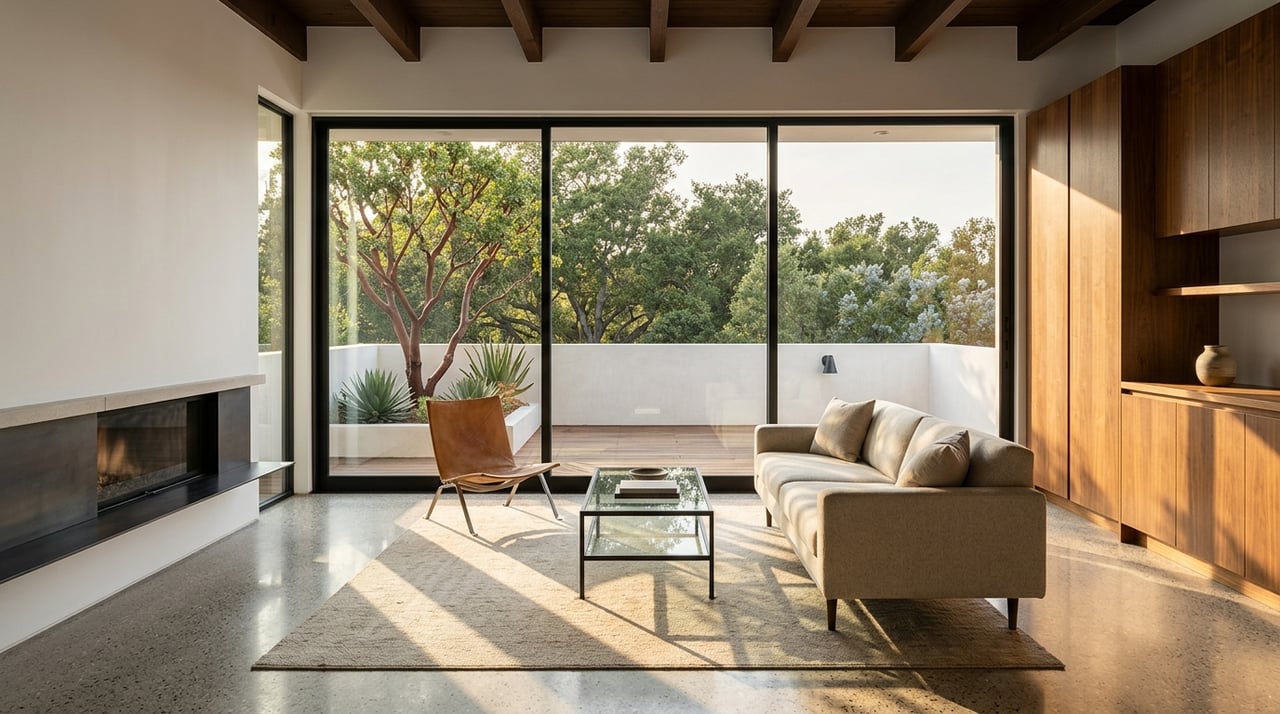
What if the real luxury of a Hollywood Hills midcentury home is not square footage, but the way light moves through glass, the way a terrace opens to the basin, and the way the house seems to hover between landscape and skyline? If you are drawn to architecturally notable homes, Hollywood Hills offers a version of living that feels visual, intentional, and deeply tied to the land. Here’s what Hollywood Hills midcentury living really feels like day to day, and why it continues to resonate with design-minded buyers. Let’s dive in.
Hollywood Hills Living Starts With the Site
In the Hollywood Hills, the setting shapes the experience as much as the architecture. Postwar hillside homes were often built on steep lots that many people once saw as hard to use, and that challenge became part of their identity.
Instead of turning inward to the street, many of these homes turn outward to the valley, canyon, or skyline. That means your daily experience is often defined by outlook, privacy, and topography rather than by a traditional neighborhood grid.
The streets themselves help set the mood. Winding roads, perched lots, and homes tucked into slopes make the area feel more cinematic and less predictable than a flatter part of Los Angeles.
Midcentury Design Feels Open and Light-Filled
Hollywood Hills midcentury homes tend to share a few defining traits. Open layouts, steel-and-glass construction, flat roofs or broad overhangs, and strong indoor-outdoor flow all show up again and again.
These design moves are not just aesthetic. They are practical responses to sun, air, and slope, which is why many of these homes still feel fresh and livable today.
The Bailey House offers a clear example of this thinking. Its open plan, floor-to-ceiling glass, north-south orientation, sliding doors for cross-ventilation, and climate-sensitive design show how architecture and environment were meant to work together.
Why the Light Feels Different
In a hillside midcentury home, light is part of the architecture. Mornings can feel bright and crisp, afternoons bring longer shadows, and evenings often shift the focus to city lights and layered views.
That changing rhythm gives the home a dynamic quality. The same room can feel calm and airy during the day, then dramatic and intimate at night.
Why the Layout Feels Modern
Many of these homes were designed with fewer visual barriers than later suburban layouts. That openness can make the space feel flexible, whether you are entertaining, relaxing, or setting up a work-from-home area.
For buyers who value design, this is often the appeal. The house does not just contain your routine. It shapes it in a way that feels considered and visually connected.
Iconic Homes Show the Range
Hollywood Hills midcentury living is not one look. Even among well-known homes, you can see how the same design era produced very different solutions.
Chemosphere Shows the Drama
John Lautner’s Chemosphere may be the clearest example of a house becoming one with an unusual lot. Perched on a 29-foot concrete column with windows on all sides, it turns a steep site into the entire concept.
What it signals to buyers is simple: in the Hollywood Hills, topography is not a problem to hide. It is often the starting point of the design.
Stahl House Shows the View
Pierre Koenig’s Stahl House is famous for its glass-and-steel form, dramatic overhangs, and twilight view over the basin. It captures the feeling that a living room can act almost like a lookout.
That sensation is a big part of the neighborhood’s appeal. You are not just inside the home. You are constantly aware of the landscape beyond it.
Bailey House Shows the Quiet Side
The Bailey House shows a more restrained version of midcentury living. It is simpler, smaller in scale, and highly responsive to orientation and climate.
For many buyers, that is the sweet spot. Not every midcentury house in the hills is theatrical, but many still offer the calm elegance of glass, proportion, and indoor-outdoor connection.
Daily Life Leans Outdoors
Hollywood Hills midcentury living often feels outdoors-first. Decks, pools, terraces, and large sliding doors make it easy for everyday routines to spill outside.
That pattern fits the wider rhythm of the area. Some of Los Angeles’s best-known outdoor destinations are part of the local experience, and they reinforce a lifestyle shaped by views, movement, and open air.
The Hollywood Bowl Adds Ritual
The Hollywood Bowl is both a performance venue and an 88-acre county park with picnic areas and pre-show gathering spaces. That gives the area a familiar social rhythm, especially during concert season.
It also helps explain why entertaining feels so natural in these homes. A terrace dinner, a sunset drink, or a casual indoor-outdoor evening can feel very much in sync with the neighborhood.
Because parking at the Bowl is limited, park-and-ride and shuttle options are a central part of the experience. That is one example of how Hollywood Hills living blends retreat with real-world logistics.
Griffith Park Expands Your Backyard
Griffith Park spans more than 4,210 acres and includes trails, picnic areas, the Greek Theatre, the Griffith Observatory, and the LA Zoo. For many residents, this adds a strong outdoor layer to everyday life.
The Griffith Observatory itself sits 1,134 feet above sea level on the south slope of Mount Hollywood and offers free admission along with expansive public views. It stays open late nearly every evening, which adds another easy way to experience the landscape after work or on a casual weeknight.
Runyon and the Sign Keep It Active
Runyon Canyon and the official Hollywood Sign trail system support the area’s casual, movement-based culture. Runyon Canyon covers 160 acres, while the official Hollywood Sign routes offer authorized hiking access from sunrise to sunset.
Together, these amenities help explain why people often describe Hollywood Hills in terms of hiking, walking, lookouts, and fresh air. The lifestyle is not just about the home itself, but how often the outdoors becomes part of your routine.
Privacy and Openness Coexist
One of the most interesting things about Hollywood Hills midcentury homes is how they can feel visually open and private at the same time. Large panes of glass may open toward a view, while the siting and slope limit direct street exposure.
That contrast is part of the appeal. You may feel connected to the sky and basin without feeling overly exposed to the road or the homes around you.
For design-minded buyers, this can be hard to replicate elsewhere. The combination of glass, elevation, and careful orientation often creates a very specific kind of calm.
The Tradeoffs Are Real
As beautiful as this lifestyle can be, hillside living comes with practical realities. In the Hollywood Hills, the same geography that creates the views also creates maintenance, access, and planning considerations.
Steep sites can be prone to slides and destabilization, which is why drainage, driveway conditions, and site engineering matter so much. These are not background details. They are part of how the property functions over time.
Access Can Take More Planning
Winding roads and hillside positioning can make access feel different from a flatter neighborhood. On busy weekends, holidays, and summer days, some nearby destinations also see congestion and limited parking.
That does not mean the area is less livable. It simply means your routine may include a little more planning around traffic, events, and routes.
Wildfire Readiness Matters
Wildfire preparedness is an important ownership topic in hillside Los Angeles. CAL FIRE recommends home hardening and 100 feet of defensible space, and the Los Angeles County Fire Department directs residents to evacuation planning and wildfire action resources.
For buyers considering a midcentury home, this is part of the bigger picture. The architectural romance often comes with a practical mindset around ongoing upkeep and preparedness.
Why Buyers Still Love It
For the right buyer, Hollywood Hills midcentury living offers something hard to quantify but easy to feel. It is the choreography of light, privacy, view, and outdoor ritual working together in one place.
These homes often feel less like standardized product and more like design responses to a very specific site. That can make the search more nuanced, but also more rewarding when you find the right fit.
If you are drawn to architecture with real presence, a home here can offer more than a backdrop. It can shape how you move through your day, how you entertain, and how you experience Los Angeles itself.
Whether you are buying a hillside midcentury or preparing one for sale, the details matter. From siting and condition to presentation and narrative, a design-forward property deserves a thoughtful strategy. If you’re ready to explore Hollywood Hills with a local, hands-on perspective, connect with Sarah Minka Jackson.
FAQs
What defines a Hollywood Hills midcentury home?
- Hollywood Hills midcentury homes often feature open plans, large expanses of glass, flat roofs or broad overhangs, and design choices that respond directly to sun, slope, and views.
What does daily life in Hollywood Hills feel like?
- Daily life often centers on light, outlook, privacy, and outdoor living, with routines shaped by terraces, views, winding roads, and easy access to hiking and cultural landmarks.
What outdoor amenities support Hollywood Hills living?
- Nearby amenities include Griffith Park, Griffith Observatory, Runyon Canyon, the official Hollywood Sign trails, and the Hollywood Bowl, all of which reinforce an outdoors-oriented lifestyle.
What should buyers know about Hollywood Hills hillside living?
- Buyers should pay close attention to access, drainage, driveway conditions, site engineering, and the realities of maintaining a home on a steep lot.
What wildfire considerations matter in Hollywood Hills?
- Wildfire readiness is an important part of ownership, including home hardening, defensible space, and having an evacuation and action plan in place.
Why do design-minded buyers seek Hollywood Hills midcentury homes?
- Many buyers are drawn to the combination of architectural character, indoor-outdoor flow, strong visual connection to the landscape, and a lifestyle that feels both private and distinctly Los Angeles.