What does oceanfront living in Santa Monica actually feel like when you are not standing in the sand? For many buyers, that is the real question. If you are drawn to the coast but want a fuller picture of daily life, Santa Monica offers much more than postcard views, and this guide will help you see how the city’s parks, neighborhood corridors, markets, and mobility shape the experience. Let’s dive in.
Santa Monica Feels Like a Coastal City
Santa Monica is not just a beach destination. It is a compact coastal city of 8.3 square miles with about 93,000 residents, and the daytime population rises to roughly 250,000 people. That mix helps explain why life here feels active, layered, and neighborhood-based.
If you are considering a move, this matters. The oceanfront lifestyle is tied to everyday routines, not only weekend recreation. You are looking at a place where errands, coffee runs, bike rides, park time, and market mornings all connect.
The Climate Supports Outdoor Living
One reason Santa Monica feels so livable is its steady coastal climate. NOAA normals for the Santa Monica Pier station show an annual mean temperature of 60.5°F, with monthly means ranging from 55.8°F in January to 66.0°F in August and 65.5°F in September.
That relatively narrow temperature range supports a year-round outdoor rhythm. Instead of planning life around major seasonal swings, you are more likely to build the outdoors into your regular routine.
The Beach Is Only the Beginning
Santa Monica State Beach is a major part of the city’s identity, with three miles of shoreline and 245 acres of beach. But the bigger lifestyle story is how the beach connects to everything around it.
The city also identifies 32 public parks as part of the resident experience. So even if the ocean is your first draw, daily life often expands into bluff-top walks, neighborhood green space, and public gathering places beyond the shore.
Palisades Park Adds a Scenic Daily Pause
Palisades Park stretches 26 acres along Ocean Avenue. It includes bay views, benches, picnic areas, public art and monuments, a rose garden, and the Camera Obscura Art Lab.
For many people, this kind of space shapes how a neighborhood feels day to day. It gives the oceanfront experience a more lived-in rhythm, with room for walking, sitting, meeting friends, or simply catching the sunset.
The Beach House Broadens Public Access
The Annenberg Community Beach House adds another layer to coastal life. Located on five acres of oceanfront property, it offers public amenities such as a pool, splash pad, open seating, free Wi-Fi, beach courts and fields, and community programming.
That mix makes the coastline feel more usable in everyday life. It is not only a view or a destination. It is part of a broader network of spaces where people spend time, recharge, and gather.
Bike Culture Shapes the Lifestyle
Santa Monica’s Bike Action Plan is intended to address congestion and promote active, healthy living by making the city bike-friendly. In practice, that creates a strong connection between the coast, neighborhood streets, and daily errands.
If you value movement and convenience, this is one of the city’s defining lifestyle features. You can experience the coast as part of your routine, not only as a backdrop.
Paths Connect the Coastline
Santa Monica sits on the Marvin Braude Beach Trail, a 22-mile oceanfront bike route through several beach cities. Along Santa Monica’s own shoreline, the beach biking path runs for three miles from Will Rogers State Beach to the north to Venice Beach to the south, with a parallel pedestrian path.
That setup supports different kinds of days. You might head out for a longer ride, take a walk by the water, or use bike routes to tie together home, shops, and public spaces.
A Few Rules Matter
Santa Monica also has specific rules that affect how you move through these spaces. E-scooters are not permitted on the beach bike path, the Pier, Ocean Front Walk, or in municipal parks such as Palisades Park.
For buyers, details like this are useful because they help define the feel of public areas. The city’s approach supports a more predictable experience along some of its busiest outdoor routes.
Markets and Corridors Create Daily Rituals
In Santa Monica, lifestyle is also shaped by where you grab coffee, shop for produce, or spend a Sunday morning. The city’s neighborhood corridors each offer a slightly different version of that routine.
This is where Santa Monica stands apart from a one-note beach town. The ocean may set the tone, but local habits often happen a few blocks inland.
Farmers Markets Are Part of the Rhythm
The Downtown Farmers Market runs year-round on Wednesdays and Saturdays. The Main Street Farmers Market runs year-round on Sundays and features about 40 certified California farms. The city’s market system also includes a Saturday Pico market.
For buyers who care about walkability and local texture, markets often become part of a neighborhood’s appeal. They add rhythm, familiarity, and a reliable sense of place.
Wellness Is Built Into Daily Life
Santa Monica’s wellness scene includes green spaces, fitness classes, spas, beach yoga, meditation, sound baths, water activities, and more than 30 studios and gyms. But the more important takeaway is that wellness here is woven into the city itself.
It is not only about scheduled treatments or special outings. It can look more like a morning bike ride, an outdoor workout, time in the park, or a market stop on the way home.
Santa Monica Works as a Series of Micro-Areas
One of the most important things to understand as a buyer is that Santa Monica is not uniform. Official and civic materials identify distinct neighborhoods including Downtown/Third Street Promenade, Main Street, Mid-City, Montana Avenue, Ocean Park, Sunset Park, Wilshire Boulevard, and the Pico Neighborhood.
That means your oceanfront lifestyle can look very different depending on where you land. The best fit often comes down to the pace, street character, and daily routine you want.
Downtown and the Pier Area
Downtown and Third Street Promenade are the most visitor-heavy, retail-forward parts of Santa Monica. This area has the highest concentration of shops, restaurants, and hotels, plus the Wednesday and Saturday farmers market.
If you want energy and immediate access to activity, this area delivers that. It also places you close to the beach, the Pier, and one of the city’s busiest public environments.
Ocean Avenue and Wilshire
Ocean Avenue and the Pier area are among the city’s most iconic oceanfront blocks, with palm-lined streets, open-air restaurants and bars, hotels, and direct Pacific views. Wilshire Boulevard ends at Palisades Park, which gives that corridor a scenic, park-adjacent feel.
For buyers drawn to the visual side of coastal living, these areas often carry the strongest sense of arrival. The tradeoff is that they also sit closer to more active and visitor-facing zones.
Main Street and Ocean Park
Main Street and Ocean Park have a more laid-back feel, with coffee shops, boutiques, art galleries, and the Sunday farmers market. These areas reflect a softer version of Santa Monica’s coastal identity.
If you are looking for a neighborhood that feels connected to the beach without centering every moment around it, this part of the city may be especially appealing. It offers lifestyle texture with a more local everyday cadence.
Montana Avenue, Mid-City, and Pico
Montana Avenue reads as more residential, with tree-lined streets and more than 150 boutique shops and restaurants across 10 blocks. Mid-City is an inland arts-and-entertainment hub centered around Bergamot Station. Pico offers a smaller, more local farmers market and is described in civic and visitor materials as the city’s most ethnically diverse corridor.
These areas reinforce the idea that Santa Monica living is broader than beachfront blocks. Depending on your priorities, you may prefer a neighborhood where the coast is nearby but daily life feels more anchored in a residential or local-serving setting.
What Buyers Should Notice in Homes
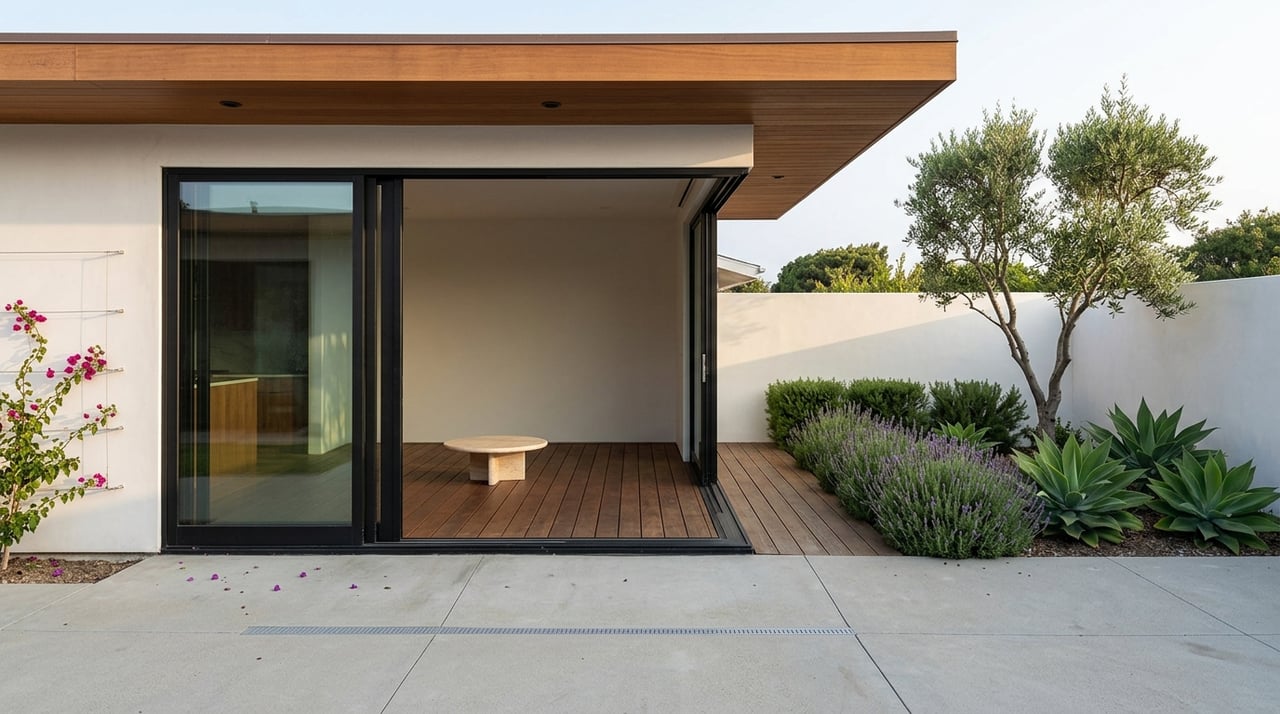
Santa Monica’s mild climate naturally supports features like large windows and indoor-outdoor living. In design terms, that can make homes feel more open, bright, and connected to their setting.
For design-minded buyers, this is where lifestyle and architecture meet. A home’s orientation, light, outdoor space, and connection to the street can matter just as much as distance to the water.
Coastal Setting Meets Practical Reality
The city says sea-level rise and flooding are among Santa Monica’s most substantial climate threats. Its dune restoration program is intended to protect homes, roads, bike paths, telephone lines, and parks.
That does not take away from the appeal of the coast, but it does add an important layer for buyers. In oceanfront and near-ocean locations, the setting is part of the beauty and part of the practical due diligence.
Bluff-Top Living Has Its Own Considerations
The city also notes that the Palisades bluffs are fragile and subject to erosion. That makes bluff-top and ocean-adjacent living about more than views alone.
If you are evaluating homes in these areas, the surrounding topography and maintenance context are worth understanding. In Santa Monica, the coastline is not static, and that is part of how the city’s built environment works.
Why Lifestyle Fit Matters Here
In Santa Monica, the best move is not always the home closest to the sand. Often, it is the home that best matches how you want to live, whether that means morning market walks, park access, a bike-oriented routine, design-forward interiors, or a quieter pocket with quick access to the coast.
That is why local micro-market knowledge matters. Santa Monica’s oceanfront lifestyle is real, but it shows up differently block by block.
If you are weighing Santa Monica as a place to buy or sell, a design-minded, neighborhood-specific approach can make all the difference. For curated guidance on Santa Monica and other Los Angeles micro-markets, connect with Sarah Minka Jackson.
FAQs
What is daily life in Santa Monica like beyond the beach?
- Santa Monica functions as a compact coastal city where beach access, parks, farmers markets, bike routes, and neighborhood corridors all shape everyday routines.
What parks and public spaces support Santa Monica oceanfront living?
- Santa Monica identifies 32 public parks, and key ocean-adjacent spaces include Palisades Park and the Annenberg Community Beach House.
What makes Santa Monica bike-friendly for residents?
- The city’s Bike Action Plan supports active transportation, and Santa Monica connects to both a three-mile beach path and the 22-mile Marvin Braude Beach Trail.
What are the main neighborhood differences in Santa Monica?
- Downtown and the Pier area are more active and visitor-facing, while areas like Main Street, Ocean Park, and Montana Avenue offer different mixes of local shops, markets, and residential character.
What should buyers know about oceanfront homes in Santa Monica?
- Buyers should look at lifestyle fit, indoor-outdoor design, and practical location factors such as flooding concerns, dune protection efforts, and bluff erosion context in certain areas.