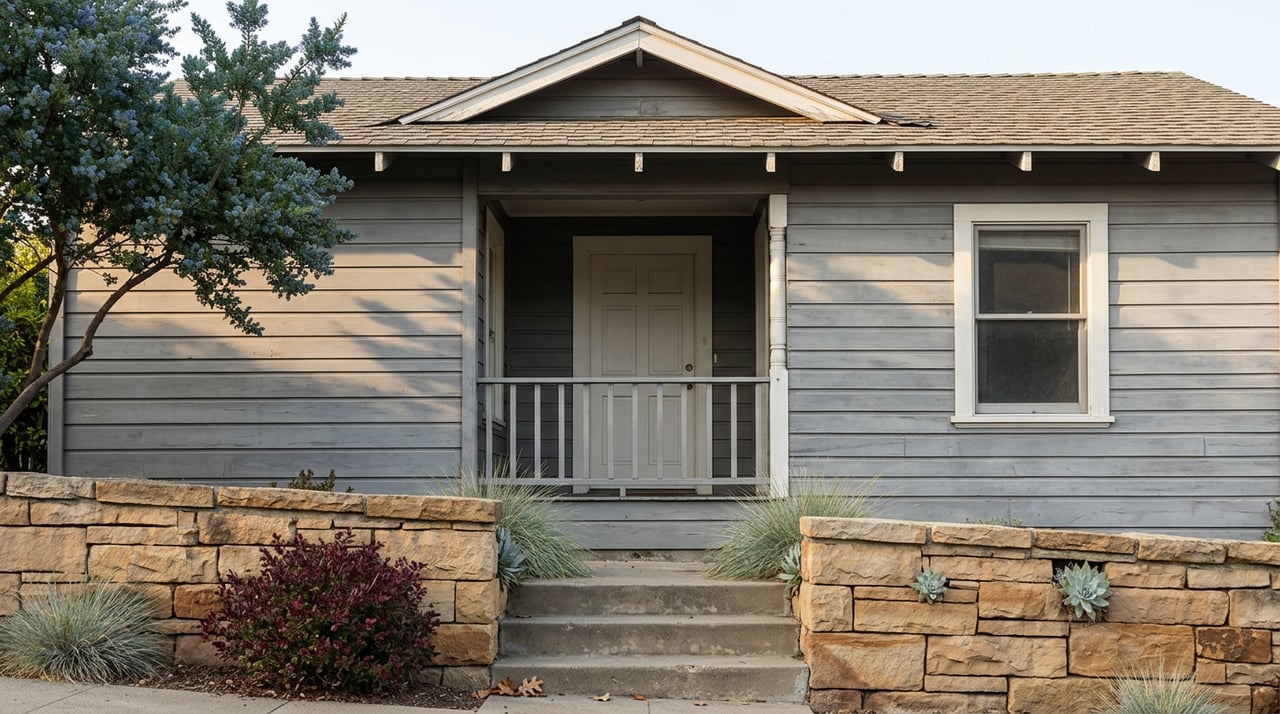
A buyer and seller shake hands on a Silver Lake hillside home in June. Escrow opens with the standard thirty-day contingency period. Everyone assumes the deal is basically done, because the house showed well and the offer cleared comps. Then, somewhere around day eighteen, the buyer's lender comes back with an insurance quote that is nowhere near what anyone budgeted for, or a permit search turns up an addition nobody disclosed. By then the sellers have stopped fielding backup offers and the neighbors already assume the sign will come down with a "sold" sticker on it. Instead, the deal cracks, and everyone starts over from a weaker position than where they began.
That sequence is common enough on Silver Lake's hillside streets in 2026 that it is worth naming directly: on this tier of the market, the paperwork behind a listing now does more to set its final price than the paint, the counters, or the staging. Presentation still matters everywhere else in Silver Lake. On a slope, the file is the presentation.
Three Markets Wearing One Median
Anyone who has pulled up a median price for Silver Lake has noticed the number moves depending on which site they check, somewhere in the neighborhood of $1.4 million to $1.7 million as of mid-2026. The spread is not noise. It is three sub-markets reporting through one zip code.
| Sub-market | Typical price band | Typical days on market |
|---|---|---|
| Reservoir-adjacent | roughly $1.6M to $1.9M | 14 to 21 days |
| Flats near Sunset Junction | roughly $1.2M to $1.55M | 18 to 30 days |
| Hillside and stair-access | roughly $950K to $1.5M | 45 to 70+ days |
The reservoir tier moves fastest because supply is thin and buyers tolerate less friction to get walking access to the loop trail and the meadow. The flats trade on straightforward things: architectural condition, whether the kitchen and baths have been touched, whether there is a permitted accessory dwelling unit adding rental upside. The hillside tier is where the range blows open, and it is also where two homes two blocks apart can carry a value gap of roughly $400,000 driven by nothing more than view orientation, lot gradient, and architectural period.
That gap is the reason a single median headline is close to useless for anyone actually shopping or listing in Silver Lake this year. It is also why the market has split into what amounts to two different buying experiences under one name. Homes that go into contract within roughly two weeks of listing have recently sold for around 8.6 percent above asking in the first quarter of 2026. Homes that sit for a month or longer have closed closer to 3 percent below asking. A year earlier the pattern was nearly identical, just slightly less extreme. Overpricing a hillside listing by even 5 percent can add roughly a month to its time on market and still net less at closing than a sharp opening price would have.
None of that is really about staging. It is about how confidently a buyer can price the risk sitting underneath the house.
The File Is The Product
Silver Lake's hillside streets carry a genuine mix of 1920s and 1930s bungalows, post-war California cottages, and a real concentration of mid-century modern homes, some with documented provenance, most simply built for the view. Richard Neutra's own VDL Research House sits in this neighborhood and holds National Historic Landmark status, alongside work associated with R.M. Schindler, Gregory Ain, and John Lautner. That architectural weight is part of why design-minded buyers gravitate here in the first place.
It is also part of why the paper trail behind a slope property has become the thing buyers, lenders, and appraisers scrutinize hardest. On any parcel steeper than a flat lot, five pieces of documentation now do most of the work of setting confidence, and by extension, price:
- A complete permit history from the Los Angeles Department of Building and Safety covering every addition, deck, accessory dwelling unit, and window change on the structure.
- Engineered plans with final sign-off for any retaining wall above the height that requires a permit.
- A current soils or geotechnical report, especially where there is visible slope movement, cracked hardscape, or a history of drainage work.
- A completed Natural Hazard Disclosure Statement, marking whether the parcel sits in a mapped earthquake-induced landslide zone, a liquefaction zone, an Alquist-Priolo earthquake fault zone, or a high or very high fire hazard severity zone.
- Confirmation of whether the property falls inside a Hillside Construction Regulation district, since city grading and hauling rules layer stricter standards on top of ordinary hillside requirements in those areas.
None of this is optional paperwork a seller can quietly skip. Grading permits in the city's Hillside Grading Area generally require a soils or geology report before they are issued in the first place, and California's earthquake hazard mapping tool lets any buyer check a specific address for fault rupture, liquefaction, or landslide zones before they ever write an offer. A missing permit or an unresolved retaining wall issue does not just slow down escrow. It gets priced. On a mid-range hillside sale, a documented wall or drainage problem commonly translates into a five-figure credit request from the buyer's side, sometimes more where engineered remediation is involved.
Silver Lake's older housing stock adds its own version of this friction. A meaningful share of the inventory dates to the 1920s through the 1940s, which means inspectors on both sides regularly encounter galvanized supply pipes that fail pressure tests, remnants of knob-and-tube wiring in attic spaces, and asbestos-containing material in original popcorn ceilings or floor tile mastic. None of that is unusual for a house this age. What is unusual is how often sellers still wait for the buyer's inspector to find it first, rather than assembling the answer before the home ever gets photographed.
The Insurance Clock Is Actually Running
There is a second layer of friction stacking on top of the paperwork, and it has a hard date attached to it. California's FAIR Plan, the state's insurer of last resort for homes that private carriers have declined to cover, is raising rates by an average of 29.1 percent effective October 15, 2026, according to the California Department of Insurance's approved filing. That is the largest increase in the plan's recent history, and it lands in fewer than nine weeks from today.
The increase is a statewide average. Homeowners in higher wildfire risk areas are expected to see considerably steeper jumps, with some wildfire-portion premiums doubling. Silver Lake is not usually mentioned in the same breath as Malibu or the Hollywood Hills when this topic comes up, but its hillside streets sit inside a Very High Fire Hazard Severity Zone under Los Angeles County's mapping, the same classification driving costs across the hillier parts of the city. Upper hillside parcels that have already lost access to standard carrier coverage are landing on the FAIR Plan at somewhere between roughly $9,600 and $14,400 a year, typically paired with a difference-in-conditions policy to cover what the FAIR Plan itself does not. Flat-grid streets in the lower elevations, the pockets around Effie Street, Maltman Avenue, and Rowena Avenue, generally still qualify for standard homeowner's coverage.
The state's exposure through the FAIR Plan reached $768 billion as of June 2026, an increase of roughly 11 percent since September 2025 and 250 percent since September 2022, a run-up accelerated in part by the losses from January 2025's Los Angeles wildfires. That is the financial backdrop behind why an insurance quote, not a home inspection, is increasingly the thing that ends a Silver Lake hillside escrow early.
A house does not stop selling because the buyer changed their mind. It stops selling because a number came back that nobody priced in ahead of time.
What This Actually Changes
For a seller, the fix is sequencing. Pulling permit history, ordering a soils review where the lot shows any grade, and getting a firm insurance quote, not an estimate, before the property ever goes live turns three potential deal-killers into three known quantities a buyer can underwrite around. For a buyer, the same documents are worth requesting up front rather than waiting for them to surface during a contingency period that is already ticking.
Either way, the lesson holds for anyone weighing a hillside purchase or listing before the fall insurance shift: on this tier of Silver Lake, the file closes the deal. The finishes just get someone in the door.
A Few Questions Worth Asking Directly
Is a soils report required for every Silver Lake sale? Not on flat lots. On any parcel with real grade, past drainage work, or visible slope movement, a current soils or geotechnical report has become a routine request from buyers and their lenders in 2026.
How do I find out if a specific address sits in a fire hazard zone? CAL FIRE maintains a public viewer showing whether a parcel falls into a Moderate, High, or Very High Fire Hazard Severity Zone, and the California Geological Survey's EQ Zapp tool lets you check the same address for mapped fault, liquefaction, and landslide zones.
Does the October rate increase apply to every Silver Lake home? No. It is a statewide FAIR Plan adjustment, and its size varies by parcel-level wildfire risk. Flats properties near Sunset Junction generally sit outside the highest-risk designation and are less exposed than the upper hillside streets.
If you are weighing a purchase or a listing on a Silver Lake slope this fall, the paperwork and the insurance timeline are worth working through before a single photograph gets taken. Sarah Minka Jackson has spent her career pairing that kind of hands-on transaction management with the design instincts Silver Lake buyers respond to. Let's Connect and start your curated search.