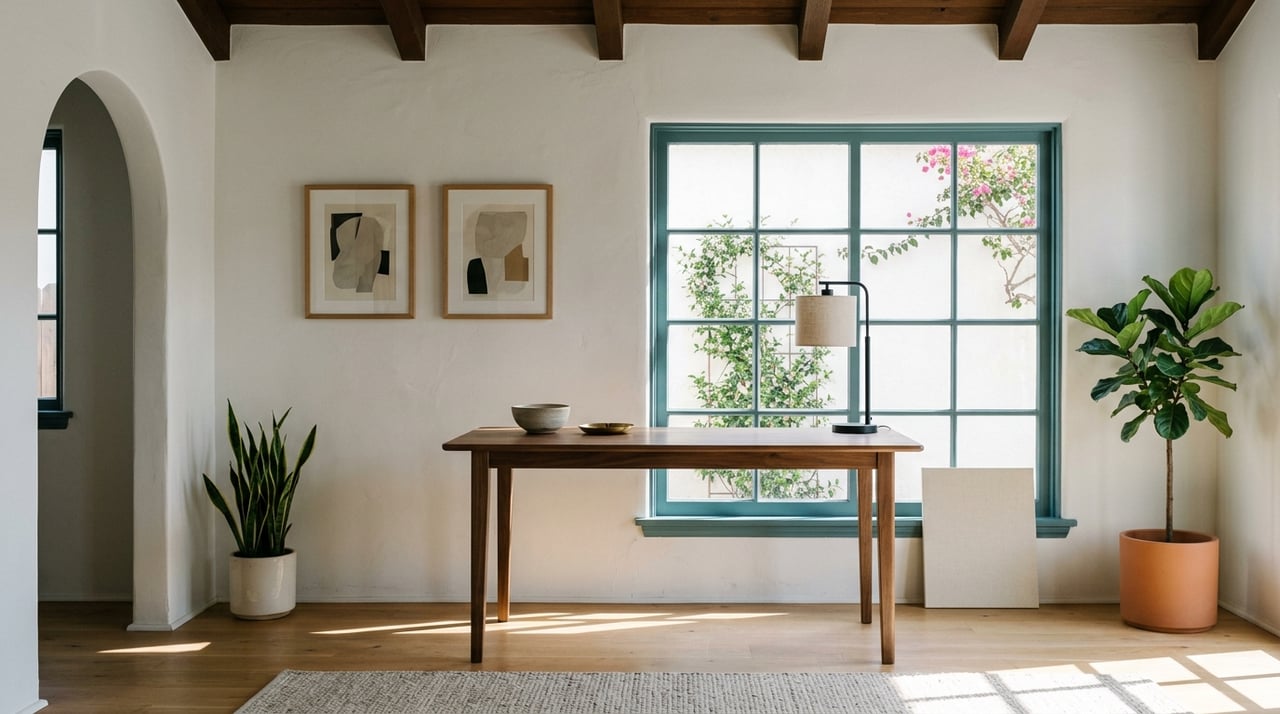
What makes a home in Highland Park feel like it truly belongs there? It is not just the address or the architecture. It is the way the neighborhood’s creative energy shows up in everyday spaces, from front porches and stained glass to vintage finds, layered textures, and rooms that can shift with your life. If you are buying, selling, or simply refining your sense of style in Highland Park, understanding that connection can help you see homes more clearly. Let’s dive in.
Highland Park’s creative pulse
Highland Park’s creative identity is closely tied to North Figueroa and York Boulevard. The North Figueroa Association describes the corridor as a busy area for living, commerce, entertainment, and leisure, shaped by independent galleries, small businesses, artisan shops, cafes, and restaurants.
That mix gives the neighborhood a lived-in, curated feel. Discover Los Angeles notes that musicians, artists, designers, and longtime residents all help shape a retail scene centered on vintage, records, stationery, accessories, and design. In practical terms, that kind of environment often influences what people want their homes to feel like too.
Creative anchors shape local taste
Several long-running creative spaces help define Highland Park’s visual language. Avenue 50 Studio is a nonprofit gallery with workshops and community programming, while YDS Design & Gallery offers art classes and creative events on North Figueroa.
Judson Studios adds another layer to that story. Based in Garvanza, it is the oldest family-run stained-glass company in America, and its historic headquarters and exhibitions reinforce a strong local connection to craftsmanship and artisan detail.
Other creative businesses help round out the picture. OBRA Barn showcases local makers, Scrap Labs works across illustration and design, and The Quiet Life has maintained a design studio and retail presence in Historic Highland Park since 2004 before moving from Figueroa to York in 2019.
Cafes and shops set the rhythm
Home style does not develop in a vacuum. In Highland Park, daily routines are shaped by neighborhood places like Civil Coffee on the historic Route 66 corridor, The Highland Cafe on York, Alfred Coffee on Figueroa, and Rosebud Coffee.
The shopping mix adds even more texture. Discover Los Angeles highlights Arroyo Records, The Bearded Beagle, Dotter, Future Music, Galco’s, Shorthand, and The Quiet Life as part of the neighborhood’s retail identity.
When a neighborhood is full of places that value objects with personality, utility, and visual interest, homes often follow that lead. Buyers may respond to spaces that feel collected rather than generic, and sellers can benefit from presenting a home with that same sense of intention.
Historic homes anchor the look
Highland Park’s architecture gives that creative energy a strong physical foundation. The city’s Highland Park-Garvanza HPOZ is the largest historic overlay zone in Los Angeles, with about 4,000 structures and more than fifty Historic-Cultural Monuments.
The area includes architecture from the 1880s through the 1940s, including Queen Anne, Shingle, Craftsman, Mission Revival, and Tudor Revival styles. The city also notes that Highland Park-Garvanza was the first HPOZ in Los Angeles to include commercial buildings, which helps explain the close relationship between storefronts, studios, and homes.
Craftsman homes lead the story
According to the preservation plan, the majority of historically significant homes in Highland Park are Craftsman bungalows. That matters because Craftsman design is not just a style label. It carries a whole set of visual and material cues that still resonate with today’s buyers.
The plan describes features like low-pitched roofs, porches, cross-ventilation, earth-toned materials, and an emphasis on craftsmanship. Those details fit both Southern California’s climate and the Arts and Crafts tradition that shaped much of the neighborhood’s historic fabric.
If you are walking through a Highland Park home, these are the kinds of features that often make a space feel authentic. Original woodwork, built-ins, porch presence, and practical flow tend to read as part of the neighborhood’s natural language.
Why creativity influences home style
Highland Park’s creative scene likely encourages a preference for homes that feel tactile, adaptable, and thoughtfully composed. Based on the neighborhood’s mix of galleries, maker-oriented retail, cafes, and historic homes, it makes sense that many people are drawn to spaces with character rather than a one-note finish.
That often translates into features like handcrafted lighting, stained glass, original hardware, tile, earthy palettes, and rooms that can serve more than one purpose. A guest room that also works as a studio or office feels especially aligned with a neighborhood where design, art, and daily life sit close together.
Judson Studios strengthens that reading even more. In a place where stained glass and traditional craft remain visibly part of the neighborhood story, artisan details can feel especially at home.
What buyers should notice
If you are shopping in Highland Park, it helps to look beyond surface updates. A newly finished kitchen may catch your eye, but the deeper question is whether the home still reflects the qualities that make this neighborhood distinct.
Pay attention to details like these:
- Original millwork or built-ins
- Porch design and how the front yard relates to the street
- Window character, including stained or decorative glass
- Materials that feel true to the home’s age and style
- Flexible rooms that can evolve with work, hobbies, or guests
- Additions or updates that feel compatible with the home’s scale
This does not mean every home has to be frozen in time. In fact, the preservation plan supports new work that is differentiated yet compatible with historic materials, features, size, scale, proportion, and massing.
What sellers can learn from it
If you are preparing to sell in Highland Park, presentation matters even more in a neighborhood with such a strong visual identity. Buyers are often responding to a feeling as much as a floor plan.
That means it is worth highlighting the elements that connect your home to the neighborhood’s broader style story. Original details, layered textures, warm woods, curated lighting, and a clear use for each space can help buyers understand not just what the home is, but how it lives.
Curb appeal matters too. The preservation plan encourages front yards to remain open semi-private spaces with landscaping and shade trees, so the exterior experience is an important part of how a property is perceived.
For many sellers, the goal is not to over-design a house. It is to reveal the house more clearly, so buyers can see its personality, proportion, and place within Highland Park.
Exterior style matters too
In Highland Park, home style starts before you open the front door. Porches, gables, landscaping, and the relationship between house and street all contribute to the neighborhood feel.
Because older and newer buildings sit side by side, the strongest exterior updates tend to respect what is already there. Thoughtful paint choices, repaired wood details, healthy planting, and a welcoming entry can often do more than trend-driven upgrades.
That is especially true in a neighborhood where architecture and daily street life are closely linked. A home’s exterior is part of the visual rhythm of the block.
The best interiors feel collected
The neighborhood’s retail and arts culture suggests a home style that feels personal and layered. Think less showroom-perfect and more thoughtfully edited.
In practice, that can mean:
- Natural wood and earth-toned materials
- Vintage or handcrafted pieces mixed with clean updates
- Art and objects that feel intentional rather than excessive
- Lighting with sculptural or artisan character
- Rooms that balance beauty with everyday function
This approach fits Highland Park because the neighborhood itself blends old and new. Historic houses, commercial corridors, and creative businesses all contribute to a style that feels expressive but grounded.
Style and preservation work together
If a home is located within the Highland Park-Garvanza HPOZ, remodels, additions, maintenance, and new construction may be subject to review standards. The preservation plan exists to help changes remain compatible with the district.
For buyers, that is useful context before planning future work. For sellers, it can help explain why preserved character and appropriate updates carry real value in this part of Los Angeles.
The key idea is simple. Highland Park style is not only about decor trends. It is about understanding the bones of the home, the block, and the neighborhood, then making choices that feel connected to all three.
If you are thinking about buying or selling in Highland Park, a design-aware strategy can make all the difference. Sarah Minka Jackson brings a thoughtful eye for character, presentation, and neighborhood context to help you navigate the market with clarity.
FAQs
What architectural styles define Highland Park homes?
- Craftsman bungalows are the dominant historic type, but Highland Park also includes Victorian cottages, Queen Anne, Shingle, Mission Revival, Tudor Revival, Colonial Revival, Spanish Colonial Revival, and later modern styles.
What does the Highland Park creative scene mean for home style?
- The neighborhood’s galleries, design studios, cafes, and maker-oriented shops support a home style that often feels curated, character-rich, and flexible in how space is used.
What should buyers look for in a Highland Park home?
- Buyers should look for architectural character, compatible updates, quality materials, porch and front-yard presence, and rooms that can adapt to changing needs.
What should sellers emphasize when listing a Highland Park home?
- Sellers should highlight original details, craftsmanship, curb appeal, and a presentation style that helps buyers connect the home to Highland Park’s design-driven identity.
Do preservation rules affect Highland Park remodels?
- Yes. In the Highland Park-Garvanza HPOZ, the preservation plan sets review standards for maintenance, repair, restoration, additions, and new construction so changes remain compatible with the district.