Picture this: morning light on a wood-trimmed porch, a warm mug in hand, and a short stroll to a cafe or market before settling into your studio or home office. If you’re drawn to character architecture and a neighborhood that fuels your creativity, Highland Park in Northeast Los Angeles may be exactly what you’ve been searching for. In this guide, you’ll learn how Highland Park’s bungalow stock is built for everyday creative living, what to look for on tours, and how to plan upgrades without losing the soul of a vintage home. Let’s dive in.
Why Highland Park fits creative daily life
Highland Park is a historic, walkable neighborhood with compact commercial corridors and leafy residential blocks. Morning routines feel active yet relaxed, with coffee shops, bakeries, and dog walkers creating a steady hum along main streets and side lanes. Afternoons often slow down on the residential blocks, while small studios host appointments, workshops, and pop-ups. Evenings and weekends bring energy back to the corridors with gallery nights, community markets, and restaurant patios that make the streets feel social and connected.
Street life adds visual interest to daily routines. Murals and storefront displays often showcase vintage furniture, local ceramics, and curated design goods. On residential streets, you notice porches and stoops in use, small front yards with drought-tolerant plantings, and the easy rhythm of neighbors coming and going. It all supports a lifestyle where you can work, relax, and connect without traveling far.
What makes a Highland Park bungalow
Signature styles you will see
The classic Highland Park home is the California or Craftsman Bungalow. You’ll notice low-pitched gabled roofs, wide eaves with exposed rafters, and porches supported by tapered columns. Many homes also feature related early-20th-century styles, including Spanish or Mission Revival cottages and period revival designs, which add variety while keeping a consistent, human-scale feel across blocks. Built mainly from the 1900s to the 1930s, these homes often retain original woodwork, leaded or stained-glass windows, built-ins, and fireplaces.
Lot patterns and orientation
Front yards are modest, which brings the porch closer to the sidewalk and encourages friendly, low-key interaction. Side yards are often narrower, and houses sit closer to the street, creating a classic bungalow rhythm from block to block. Many lots have deeper backyards that suit gardens, patios, or accessory structures. Alleys are common and can provide secondary access to garages, which influences how owners place outdoor rooms and parking.
Classic floor plans
The typical floor plan moves from porch to living room, then dining room to kitchen, with bedrooms grouped on one side. Many original footprints were compact and efficient. Kitchens and bathrooms tend to be smaller than what you see in newer homes, and older bungalows often started with a single bathroom. Inside, you’ll commonly find hardwood floors, plaster walls, picture rails, and built-in bookcases or benches.
Period details buyers love
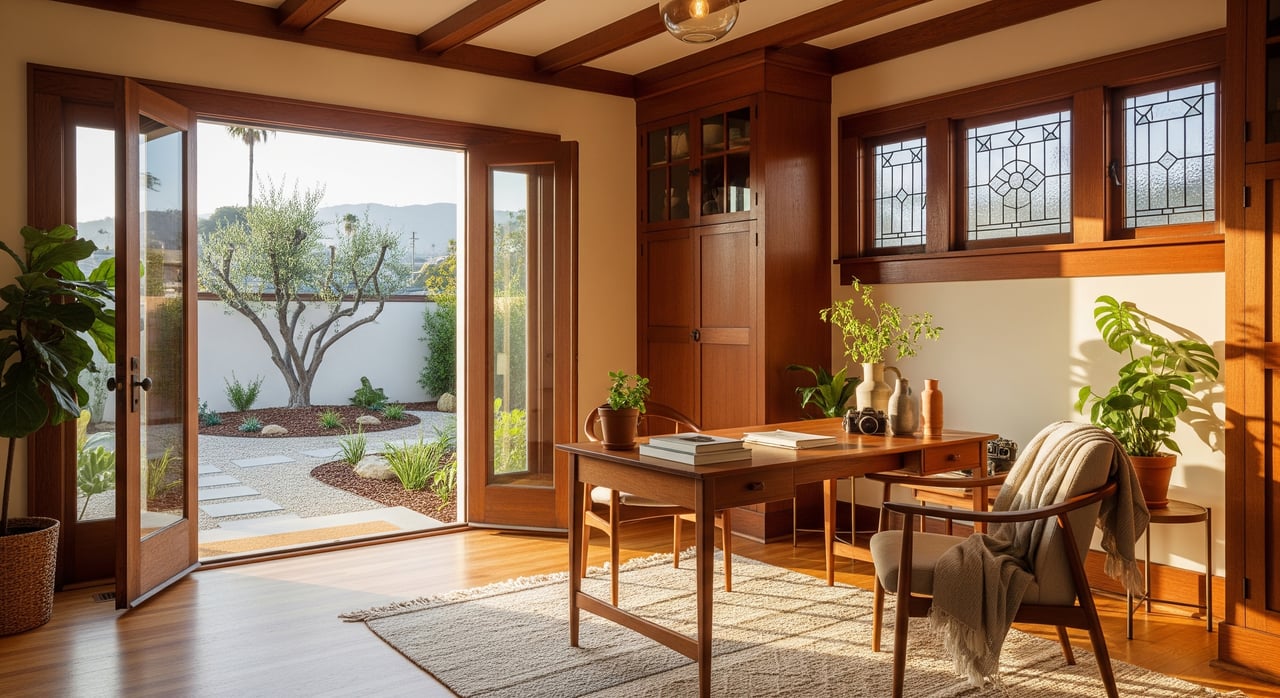
Much of the charm lies in the details: exposed woodwork, boxed beams, built-in cabinetry, original fireplace tile, and distinctive trim profiles. You’ll also see decorative vents, period lighting, and leaded or stained glass. These handcrafted touches give the interiors warmth and texture. Outside, mature street trees and active porches add to the neighborhood’s visual rhythm.
Living indoors and out
Porches and front yards
Porches are more than decoration. They bridge daily life between home and street, offering shade and a welcoming threshold for neighbors and friends. Many homeowners use low hedges, potted gardens, or drought-friendly plantings to balance privacy with a connection to the block. The result is a comfortable everyday setting that feels social without being exposed.
Backyards and ADU potential
Rear yards often run deep, which makes them prime for outdoor living, from patios and vegetable beds to yard-facing lounges and dining areas. With alley access on many blocks, detached garages and accessory structures sometimes evolve into permitted ADUs or backyard studios. If you’re thinking about an ADU or conversion, plan to verify local zoning and permitting before you assume feasibility.
Streetscapes and microclimate
Street trees do more than look good. They provide shade that cools sidewalks and porches, extending the hours you’ll actually use outdoor spaces. The tight-knit mix of sidewalks, street parking, and small front setbacks creates a pedestrian-friendly environment. Many residents describe a neighborhood-scale living room feeling right at the curb.
How creative energy shows up at home
On the streets and in storefronts
Creative energy is part of the public view in Highland Park. Murals brighten corridor walls. Retail windows often highlight vintage furniture, local ceramics, and design-forward goods that feel handcrafted and personal. Pop-up shops, weekend markets, and gallery events bring foot traffic and conversation to the sidewalks, blending commercial life with neighborhood routines.
Renovation that honors character
Design-minded owners usually work with the house rather than against it. They restore original millwork and wood floors, then modernize kitchens and baths to improve function. Open-kitchen plans can be created while preserving sightlines to trim details and fireplaces. Many use natural, neutral palettes to let the wood and tile shine, layering in mid-century pieces, handmade fixtures, or vintage finds. Flexible spaces are common, including small studios, attic conversions, or rear rooms that double as creative work areas.
Small-scale adaptive reuse
It’s not unusual to see older homes and garages adapted for live-work arrangements or permitted rentals, which supports a local, small-scale creative economy. These changes tend to be personal and low-key rather than driven by large chains, which helps preserve the neighborhood’s texture over time.
Practical buyer checklist
Preserve character while upgrading
Most buyers prioritize kitchens, bathrooms, and systems upgrades to align older homes with modern comfort. Many also add a second bath when space allows. The best results come from a preservation mindset. Keep original built-ins, millwork, and tile when possible, and match period-appropriate finishes if you need to replace elements.
Inspect the bones
Foundations in many bungalows are pier-and-beam. Look for sagging floors, moisture in the crawlspace, and proper seismic bracing of cripple walls. Electrical systems may include older wiring types that need modernization. Plumbing can be galvanized or cast iron and may need replacement. Plan for termite and dry-rot checks, especially at sill plates and porch columns, and be aware of lead-based paint in pre-1978 homes or potential asbestos in older materials. Specialist evaluation is your friend here.
Historic overlays and permits
Some blocks fall within local historic preservation overlays or districts, which can influence exterior changes and permitting. Always verify whether a specific property is in an overlay before planning alterations. Older neighborhoods commonly include unpermitted additions or garage conversions. Confirm the permitted status of prior work since this can affect financing, insurance, and resale.
Parking and ADUs
Highland Park’s alley-facing garages and driveway layouts vary by block. If you are considering an ADU or garage conversion, the presence of alley access can shape your options. On-street parking conditions change throughout the day. Visit the block at different times to understand patterns and any neighborhood permit programs.
Budget and resale
Create a realistic renovation budget that includes structural work, systems upgrades, and the cost of permits or historic review where required. Buyers often see solid long-term value when they blend thoughtful restoration with modern comfort, including open kitchen flow, smart HVAC, and an extra bath. Resale appeal tends to be strong for homes that retain authentic character, though timing and market dynamics always apply.
Touring tips for design-minded buyers
- Study the flow from porch to living to dining to kitchen. You want easy circulation that supports gatherings and creative work.
- Look closely at millwork, fireplace tile, wood floors, and trim. These details are costly to recreate.
- Check natural light and ventilation in main rooms and potential studio spaces. Good daylight can transform daily life.
- Walk the backyard with placement in mind. Consider how a deck, outdoor kitchen, or studio would connect to the interior.
- Note the garage and alley access. If you envision an ADU or a workshop, layout and setbacks matter.
- Visit at different times. Morning, afternoon, and evening vibes can shift, especially near active corridors.
If you plan to sell a bungalow
Presentation matters. The strongest sales highlight original woodwork, period lighting, a welcoming porch, and a garden that feels like an extra room. High-quality photography and narrative copy help buyers picture daily life in the home, from a quiet morning coffee to an open-doors dinner in the yard.
If light updates are on your list before selling, cosmetic improvements often deliver impact without erasing character. With access to professional tools and a curated vendor network, you can stage strategically, focus on finishes that complement the wood and tile, and elevate curb appeal. If you want to front-load improvements, a pre-sale program can help fund projects that improve market readiness. The goal is simple: preserve what makes the home special while presenting it in its best light so it reaches the right buyers.
Ready to explore Highland Park bungalows or talk strategy for selling? Reach out to Sarah Minka Jackson for a curated search, design-led listing prep, and hands-on transaction guidance.
FAQs
Are Highland Park bungalows good investments?
- Value depends on condition, block, and timing; well-maintained homes with preserved character and smart upgrades tend to appeal to buyers who value authenticity, though repair costs can be substantial.
How hard is it to add a second bathroom?
- It is feasible but requires structural, plumbing, and permitting coordination; lot size and local zoning will shape your options and timeline.
Do many bungalows still have original features?
- Many do, including built-ins, trim, fireplaces, and wood floors, but it varies by property; confirm what remains during early tours and inspections.
Are there historic rules that limit renovations?
- Some blocks sit within preservation overlays where exterior changes require review; check local planning resources for the property’s specific status.
What should I focus on during tours?
- Evaluate foundation and crawlspace, roof condition, original millwork and fireplace tile, kitchen and bath layout for future changes, permitted versus unpermitted work, and natural light for creative spaces.